
How to Sign a Car Title Over in Illinois When You Sell
By Cash For Junk Cars Northside Chicago IncPublished Last updated
How do you sign a car title over in Illinois?
To sign a car title over in Illinois, fill in the Assignment of Title area: buyer's name, date of sale, odometer reading and certification, then each seller's signed and printed name. Clear any lien first and keep your plates. Cash For Junk Cars Northside Chicago Inc buys cars across Chicago's North Side on a title signed this way.
What are you selling?
Step 1 of 2
Free towing. Paid the same day we collect the car, by Zelle, Cash App or cash.
Rather call? (708) 858-5673
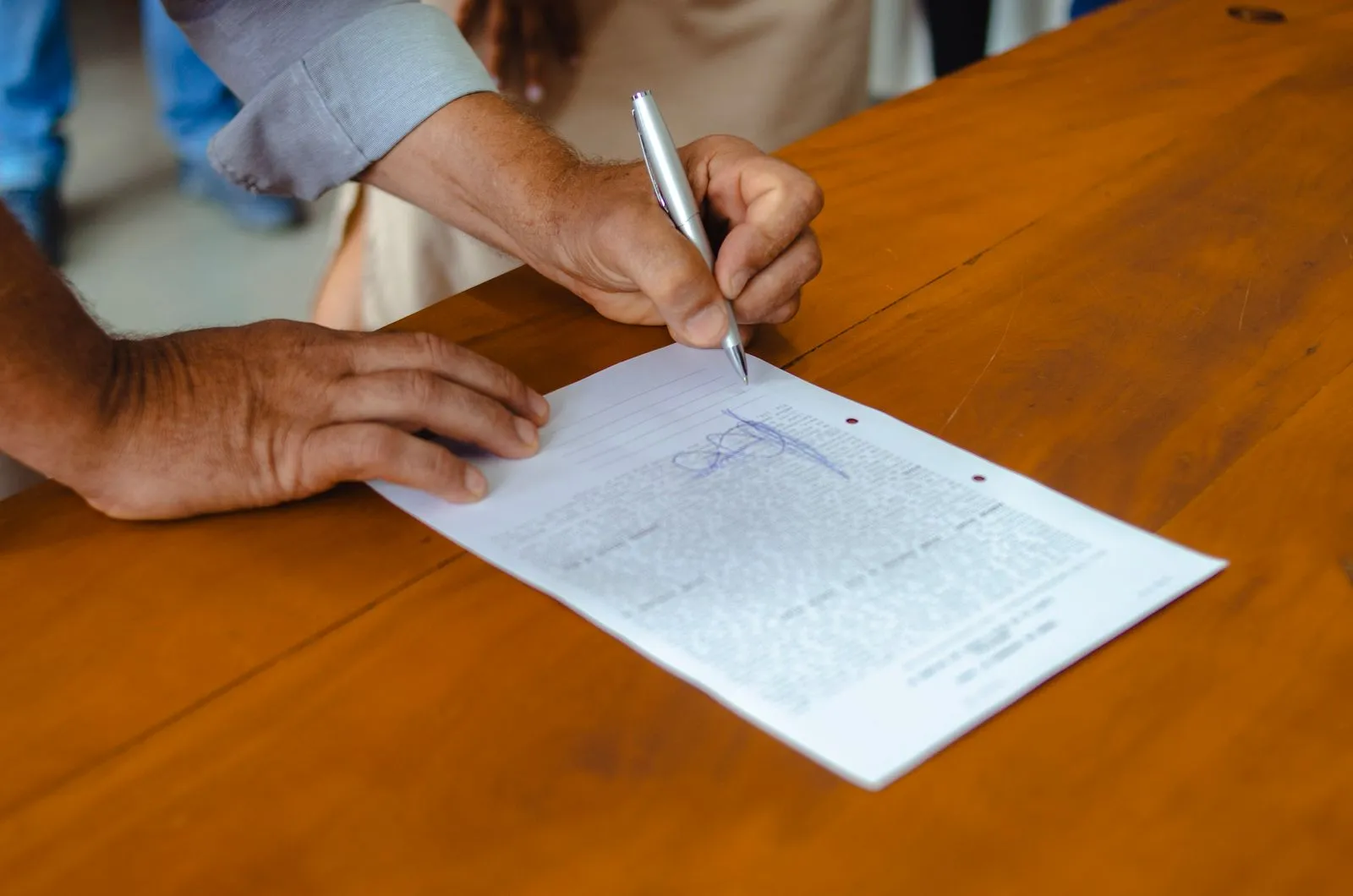
Before you sign: read the front of the title
Most title mistakes happen before the pen touches the assignment. Check that your name is printed on the front the way you’ll sign it, that every owner listed can sign, and whether a lienholder is shown. If you can’t find the title at all, read the lost-title section below first, or see how we handle cars with no title.
Where do you sign a car title to sell it?
The Illinois Secretary of State calls it the Assignment of Title area. Its title and registration FAQ says “the certificate of title must be signed in the Assignment of Title area to the individual purchasing the vehicle.” Find that heading on your title and fill in only that section. Leave the rest of the paper alone.
The legal footing is 625 ILCS 5/3-112: when you transfer a vehicle, you hand the buyer “an assignment and warranty of title in the space provided on the certificate of title,” and you do it “at the time of the delivery of the vehicle.”
Filling out the title when selling your car
When you sign a car title over in Illinois, do it with the buyer there and the car in front of you, so the mileage you write is the mileage on the dash.
- Write the buyer’s name. The SOS tips sheet VSD 293 says “the buyer’s name on the assignment area must be the same as on the application.” What goes wrong: a nickname, a missing business name, or a spelling the buyer won’t use on their paperwork.
- Enter the date of sale. VSD 293 says the odometer reading “must be certified on the Assignment of Title along with the date of sale.” What goes wrong: leaving it blank for the buyer to fill in later.
- Write the odometer reading, without tenths. Federal rule 49 CFR 580.5 asks for the reading “not to include tenths of miles,” along with the date, both parties’ printed names and current addresses, and the vehicle’s identity. What goes wrong: copying an old reading from a service sticker.
- Certify the reading. The SOS FAQ says the title must certify the reading “as the actual mileage…, in excess of the odometer’s mechanical limitations or not the actual mileage.” If the odometer is broken or you know the number is wrong, use the matching option rather than guessing.
- Sign and print your name. Every seller’s signed and printed name goes on the assignment, per the SOS FAQ. What goes wrong: one co-owner signs and the other is out of town.
- Hand over the title with the car. Section 3-112(e) says that once you’ve delivered the vehicle and done your part, you’re “not liable as owner for any damages thereafter resulting from operation of the vehicle.” Take a photo of the signed assignment for your records.
If you make a mistake, don’t improvise a fix on the title. Ask the Secretary of State how to correct it; its brochure VSD 270 covers duplicate and corrected titles.
The odometer line, and which cars are exempt
Federal law exempts older cars from the mileage disclosure, and the cutoff changed with model year 2011. Under 49 CFR 580.17, a 2010 or older model is exempt once it’s at least 10 years past January 1 of its model year. A 2011 or newer model is exempt only at 20 years. The rule’s own example: “For vehicle transfers occurring during calendar year 2031, model year 2011 or older vehicles are exempt.”
Worked through for a sale in 2026, that means a 2010 or older car is exempt, and a 2011 or newer car still needs the reading. The SOS repeats the cutoff in its paid-off loan checklist: “If the vehicle is 2011 or newer, verify the odometer reading on the vehicle with the assignment on the title.”
When a lender still shows on the title
A lienholder printed on the front means the lender has to be cleared before the buyer can title the car. The same SOS checklist asks whether the lender sent “the title where they signed their loan as satisfied” or “a lien satisfaction letter on their letterhead.” Keep that letter with the title. The checklist is blunt about why: “If you lose the title, you lose the proof that the title is satisfied.”
If the loan isn’t paid off and the lender holds the title, section 3-112(c) says that on request the lienholder delivers the certificate to the buyer for the Secretary of State, or sends it to the SOS directly. Call the lender before you agree on a pickup date, because that request is the slow part.
Lost title: get a duplicate first
The SOS process is on its duplicate titles page. You file the Application for Vehicle Transaction(s) (VSD 190) with the Duplicate Title box checked, for an original that’s “lost, stolen, or mutilated.” The fee is $50. Two timing limits: duplicates are “not issued within 15 days from the issuance of an original title, or 30 days from the issuance of a duplicate title.”
Two more rules on that page catch people out. If a lien is still on record, the duplicate goes to the lienholder unless you include a lien clearance letter, a paid-in-full contract or a court order. And an out-of-state buyer can’t apply for the duplicate on your behalf; the Illinois owner has to.
For a junk car you can’t wait on, anywhere in our North Side service area, tell us what you do have. Illinois rules decide which papers work for a scrap sale, and we’ll confirm on the call whether yours do.
After the sale: plates and the Seller’s Report of Sale
Take your plates off before the car leaves. The SOS is direct about it: “In Illinois, license plates belong to an owner, not the vehicle,” so you “cannot transfer ownership of license plates when you sell a car.” You can move them to another vehicle you own; the transfer page lists $25 for the transfer alone.
Then mail the Seller’s Report of Sale (VSD 703). The form says you “must complete this form immediately” and that it “will release your responsibility for the vehicle.” It also says it “does not meet the legal requirements for transferring ownership.” The signed title does that job; the report just tells the state you’re out.
If your registration lapsed before the sale, that’s a separate question, covered in selling a car with expired registration in Illinois. The title steps are the same if you give the car to a charity instead of selling it, and junking versus donating compares the two.
Quick answers
- Where do you transfer a car title in Illinois?
- With the Illinois Secretary of State. The buyer applies for the new title; the seller's part is the signed assignment and the Seller's Report of Sale. For in-person visits, the SOS brochure VSD 270 (January 2024) lists Chicago facilities at 100 W. Randolph, 5401 N. Elston, 9901 S. King Dr. and 5301 W. Lexington.
- How much does it cost to transfer a title to my name in Illinois?
- The Secretary of State lists the title fee as $165, paid by the buyer with the title application and the applicable tax form. Its January 2024 fee sheet (VSD 293) also lists a duplicate title at $50 and a plate transfer at $25. Fees can change, so check the SOS site before you go.
- Do all owners need to sign when selling a car in Illinois?
- The Secretary of State's FAQ says the title must show 'the signed and printed names of all the sellers and buyers,' certifying the odometer reading. If an owner can't be there, sort that out with the SOS before the sale rather than leaving a blank. We'll ask about every name on the title when you call.